

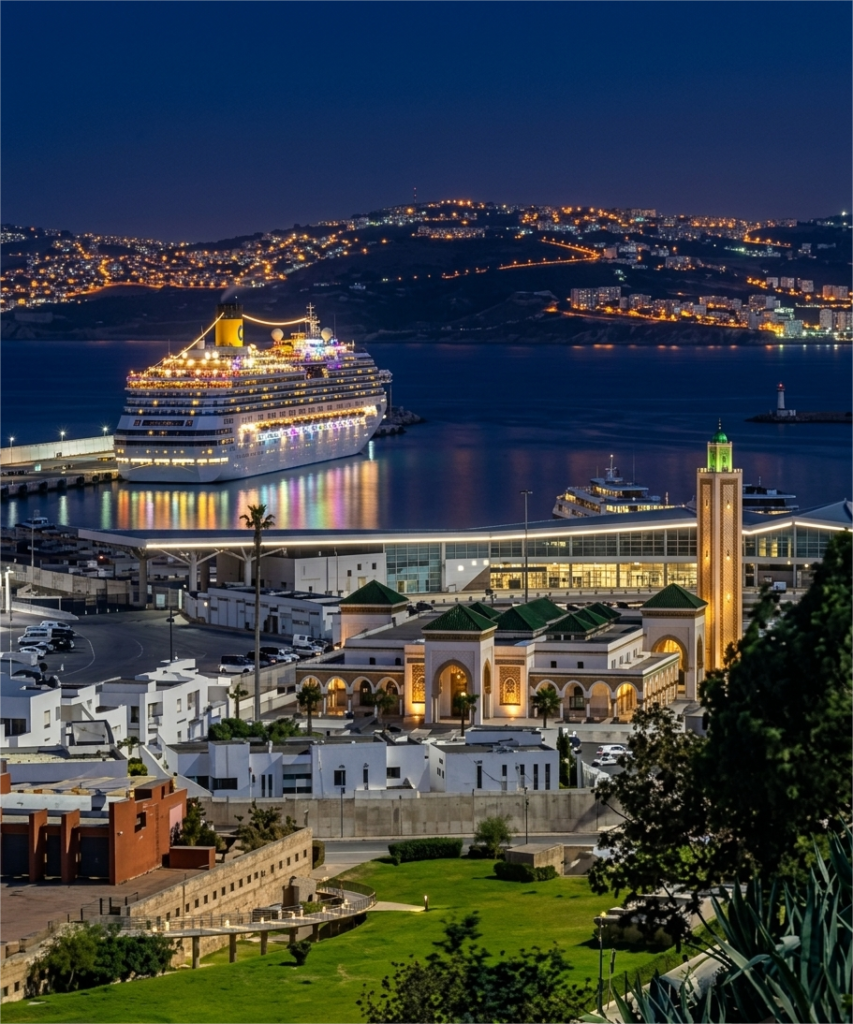
Tangier, or Tanja (طنجة) as locals call it, is one of Morocco’s most fascinating cities — a place where Africa meets Europe and the Atlantic Ocean blends with the Mediterranean Sea. Located at the northern tip of the country, Tangier has long been a crossroads of cultures, a city where traders, artists, and travelers from all over the world have gathered for centuries.
With its white-washed buildings, historic medina, and modern seafront, Tangier offers a unique combination of old and new. It’s a city full of contrasts — traditional Moroccan souks stand next to elegant cafés and European-style boulevards. Tangier’s cosmopolitan charm, rich history, and artistic vibe make it a must-visit destination for anyone exploring Morocco.
History and Cultural Heritage
Tangier’s story stretches back more than 2,000 years. Founded by the Phoenicians, it later became a Roman settlement known as Tingis. Over the centuries, it was ruled by the Vandals, Byzantines, Arabs, and Portuguese — each leaving their mark on the city’s culture and architecture.
In the 20th century, Tangier had a special status as an international zone, attracting writers, diplomats, and spies. This era gave Tangier its mysterious, romantic reputation, inspiring famous artists like Paul Bowles, Henri Matisse, and Tennessee Williams.
Today, Tangier has embraced modern development while preserving its charm. The city’s port connects Morocco to Spain in just 30 minutes by ferry, symbolizing the link between continents.
The Medina of Tangier
The Old Medina of Tangier is a maze of narrow streets overlooking the sea. It’s one of the city’s most atmospheric areas, filled with local markets, small cafés, and artisan shops.
Inside the medina, you’ll find Petit Socco, a small square that used to be a meeting point for writers and travelers. Today, it’s a perfect place to sit, sip Moroccan mint tea, and watch the city come alive. The medina also houses the Grand Mosque and the Kasbah, where ancient walls offer panoramic views of the Strait of Gibraltar.
At the top of the medina, the Kasbah Museum (Dar el Makhzen) showcases Moroccan art, traditional crafts, and historical artifacts from Tangier’s long past.
The Modern City
Outside the medina, Tangier has transformed into a modern city with wide avenues, palm-lined boulevards, and stylish cafés. The Corniche (seafront promenade) is one of the most beautiful spots in Tangier, perfect for walking at sunset or enjoying the sea breeze.
Along the Corniche, you’ll find Malabata Beach, a popular destination for both locals and tourists. The nearby Tangier Marina Bay area is filled with restaurants, luxury hotels, and nightlife — showing the city’s modern, international side.
Tangier is also home to Africa’s first high-speed train (Al Boraq), which connects the city to Casablanca in just over two hours, making travel across Morocco faster and easier than ever.
Landmarks and Must-See Attractions
Tangier is full of landmarks that tell stories of its multicultural history:
Tangier American Legation Museum: The only U.S. historic landmark located outside the United States, symbolizing the long friendship between Morocco and America.
Cape Spartel: The meeting point of the Atlantic Ocean and the Mediterranean Sea, offering stunning views of the coastline.
Caves of Hercules: A legendary site said to be where Hercules rested after separating Africa and Europe. The cave’s opening forms a shape resembling the African continent!
Grand Socco: The main square that connects the old medina with the modern city — always lively with people, taxis, and vendors.
Mendoubia Gardens: A peaceful green space near the Grand Socco, filled with centuries-old trees and fresh air.
Art and Music Scene
Tangier has always been a city of artists. Its mix of Moroccan, Andalusian, and European influences has inspired generations of painters, writers, and musicians.
You can explore local art galleries and cultural centers like Galerie Conil and Cinémathèque de Tanger, where local filmmakers and photographers showcase their work. Music festivals and cultural events are held throughout the year, celebrating both traditional Moroccan sounds and modern global styles.
In Tangier, art is not just in museums — it’s in the streets, the walls, and the rhythm of everyday life.
Cuisine and Local Flavors
Tangier’s food reflects its coastal location and international past. Fresh seafood is everywhere — grilled fish, calamari, and sardines are local favorites. Don’t miss the Tangier-style tagine with fish, tomatoes, and olives.
In cafés, you’ll see people enjoying mint tea or espresso, often accompanied by Moroccan pastries. One of the best local experiences is to visit the Central Market, where you can buy fresh fruits, spices, and Moroccan olives.
Beaches and Nature
Tangier’s coastline is one of its biggest attractions. You can relax on Municipal Beach, surf in Achakar Beach, or take a short trip to Asilah, a charming seaside town known for its blue-and-white walls and art murals.
Nature lovers will enjoy hiking near Mount Ras El Maa or exploring the green hills surrounding the city. The views of the Gibraltar Strait are breathtaking, especially at sunset when the sky turns gold and pink.
Local Life and People
Tangier’s people are known for their friendliness and open-mindedness. Because of the city’s international history, many locals speak Arabic, French, Spanish, and even English. Life in Tangier moves with a mix of Mediterranean relaxation and Moroccan warmth.
Markets are lively, cafés are full of conversations, and every corner tells a story — from fishermen by the port to artists in the Kasbah.
Conclusion
Tangier Morocco is more than just a city — it’s a feeling. A blend of cultures, a bridge between worlds, and a living testament to Morocco’s diversity. Whether you’re walking through the medina, watching the sunset at Cape Spartel, or sipping mint tea by the sea, Tangier leaves an unforgettable impression.
For travelers looking for adventure, history, and art all in one place, Tangier is truly the gateway to Morocco — and to Africa itself