

Introduction
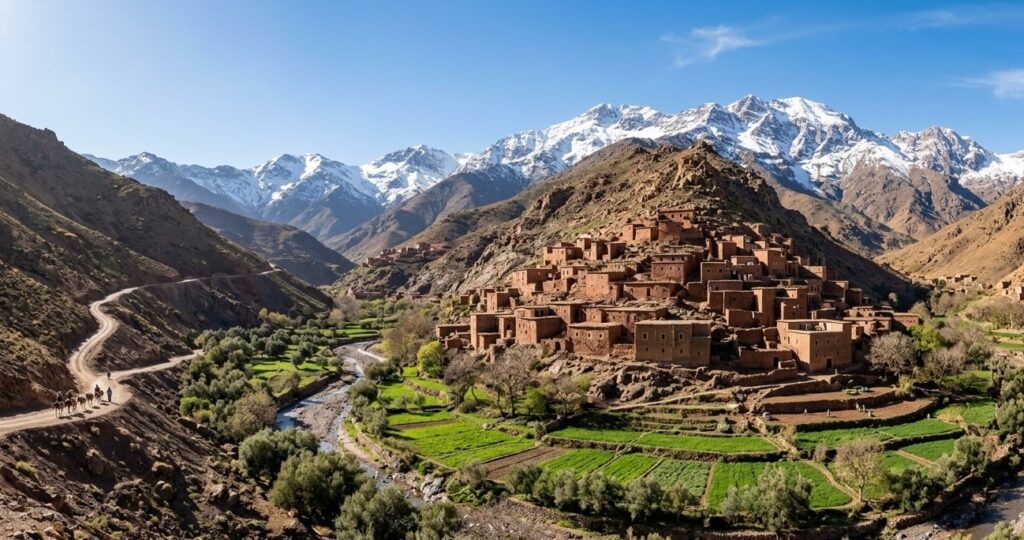
Morocco is a country of remarkable geographic diversity, where landscapes change dramatically over short distances. From the snow-capped Atlas Mountains to the golden sands of the Sahara, Morocco’s geography shapes its culture, lifestyle, and tourism.
The country’s position at the crossroads of Africa and Europe and its location along the Atlantic Ocean and Mediterranean Sea have created a rich variety of environments — mountains, valleys, deserts, forests, and coastlines. This diversity also influences Morocco’s climate, agriculture, and architecture.
Morocco’s Location and Borders
Morocco is located in Northwest Africa, bordered by:
- Algeria to the east
- Western Sahara to the south
- The Atlantic Ocean to the west
- The Mediterranean Sea to the north
This strategic location has made Morocco a meeting point of cultures, trade routes, and civilizations for centuries. Its diverse landscapes support both urban centers like Casablanca and Rabat and rural communities in mountains and deserts.
The total area of Morocco is approximately 446,550 km², including the disputed territory of Western Sahara, which adds to its desert landscapes.
The Atlas Mountains: Spine of Morocco
The Atlas Mountains stretch over 2,500 km across Morocco, Algeria, and Tunisia, dividing the country into northern and southern regions. They are Morocco’s most iconic natural feature, with three main ranges:
1. High Atlas
The High Atlas is home to the highest peak in North Africa, Jbel Toubkal (4,167 meters). Snow falls on the peaks during winter, attracting hikers, climbers, and adventure travelers.
2. Middle Atlas
The Middle Atlas is known for its lush forests, cedar trees, and volcanic lakes such as Lake Aguelmame Sidi Ali. The region is home to Barbary macaques, the only wild monkeys in Africa north of the Sahara.
3. Anti-Atlas
The Anti-Atlas is closer to the Sahara and consists of arid, rugged mountains. Its landscape includes dramatic valleys, rocky plateaus, and historic kasbahs.
The Atlas Mountains influence Morocco’s climate and agriculture, creating fertile valleys where olives, almonds, and figs thrive.
Coastal Landscapes: Mediterranean and Atlantic
Morocco has a long and varied coastline:
1. Atlantic Coast
The Atlantic coast stretches from Tangier in the north to Lagouira in the south. Cities like Casablanca, Essaouira, and Agadir are located here, offering beaches, ports, and fertile plains.
The coast is famous for:
- Surfing spots in Taghazout and Agadir
- Fishing villages and fresh seafood markets
- Port cities supporting Morocco’s economy
2. Mediterranean Coast
The Mediterranean coast, including Tangier, Tetouan, and Al Hoceima, features rocky cliffs, sandy beaches, and calm bays. The northern coast has a mild climate that supports citrus groves, olives, and vegetables.
Morocco’s coastlines connect the country to Europe via the Strait of Gibraltar, making it historically and economically significant.
The Sahara Desert: The Land of Sand and Dunes
The Sahara Desert dominates southeastern Morocco, offering iconic desert landscapes with golden dunes, rocky plateaus, and oases.
1. Erg Chebbi and Erg Chigaga
- Erg Chebbi: near Merzouga, famous for towering sand dunes that can reach 150 meters high.
- Erg Chigaga: a more remote desert area, ideal for trekking and camel safaris.
2. Desert Life
The desert is home to nomadic Berber communities who rely on camel caravans, oasis agriculture, and traditional crafts. It’s also a center for tourism, offering unforgettable experiences like desert camping, stargazing, and 4×4 adventures.
The Sahara’s landscape is ever-changing, shaped by wind and sand, offering photographers and adventurers a magical, otherworldly environment.
Rivers and Water Bodies
Morocco’s rivers and lakes are essential for agriculture, ecosystems, and human settlements. Key rivers include:
- Sebou River: the longest river, flowing into the Atlantic near Kenitra.
- Oum Er-Rbia River: supports irrigation in central Morocco.
- Moulouya River: drains the northeastern region into the Mediterranean.
Important lakes include:
- Lake Dayet Aoua (High Atlas)
- Lake Ifni (Anti-Atlas)
- Bin el Ouidane Reservoir (Middle Atlas)
These water bodies sustain agriculture, provide hydroelectric power, and support tourism in scenic regions.
Forests and Flora
Morocco’s forests range from cedar and oak in the Atlas Mountains to argan tree groves in the southwest.
- Cedar forests in the Middle Atlas are home to Barbary macaques.
- Argan forests in Souss-Massa support the production of the world-famous argan oil.
- Mediterranean woodlands and olive groves flourish in northern Morocco.
These forests not only provide resources but also protect against soil erosion and support biodiversity.
Climate and Environmental Diversity
Morocco has several climate zones due to its geography:
- Mediterranean climate: mild, wet winters and warm summers (north coast).
- Continental climate: cold winters and hot summers (Atlas Mountains).
- Desert climate: extreme temperatures, scarce rainfall (Sahara).
- Oceanic climate: moderate temperatures and humid air (Atlantic coast).
This diversity influences agriculture, lifestyles, and tourism. For example, skiing is possible in Ifrane (Middle Atlas) during winter, while camel treks in the Sahara are popular in summer.
Urban and Rural Landscapes
Moroccan landscapes are not only natural but also urban:
- Medinas: historic walled cities with narrow alleys, riads, and souks (Marrakech, Fes, Essaouira).
- Kasbahs: fortified structures in desert and mountain regions (Ait Ben Haddou, Ouarzazate).
- Modern cities: Casablanca, Rabat, and Tangier feature skyscrapers, boulevards, and ports.
This mixture of traditional and modern landscapes makes Morocco unique — a country where history meets contemporary life.
Tourism and Natural Wonders
Morocco’s geography supports tourism across multiple landscapes:
- Adventure tourism: hiking in the Atlas, trekking to waterfalls, exploring caves.
- Beach tourism: surfing, swimming, and relaxation along Atlantic and Mediterranean coasts.
- Desert tourism: camel rides, desert camping, and sand dune photography.
- Cultural tourism: exploring riads, medinas, kasbahs, and historic towns.
Morocco’s landscapes also inspire art, literature, and photography, making the country a favorite for travelers seeking diversity in one destination.
N.B
Morocco’s geography and landscapes are a vivid tapestry of mountains, deserts, forests, rivers, and coastlines. Each region offers a unique experience, from the snow-capped peaks of the Atlas Mountains to the endless dunes of the Sahara and the bustling coastal cities.
This diversity has shaped Moroccan culture, architecture, agriculture, and tourism, creating a country where nature and history coexist beautifully.
To truly experience Morocco, one must explore its landscapes, hike its mountains, sail along its coast, and wander through its deserts — discovering the country’s beauty, resilience, and magic in every region.